
What Is Lebanese Mezze? A Guide to Sharing Small Plates
Build a balanced Lebanese mezze table with creamy dips, bright salads and warm bites, whether you are sharing a starter or making small plates the meal.
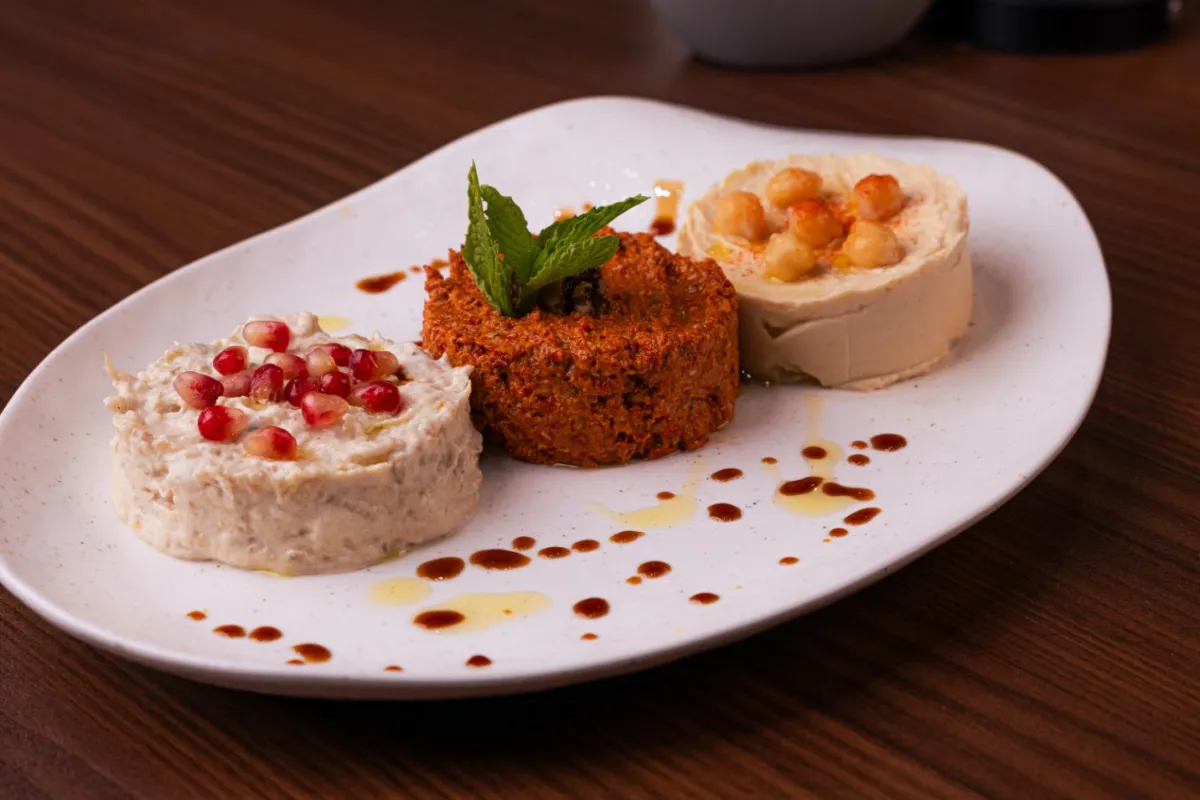
Lebanese mezze is an assortment of small dishes served for sharing, ranging from dips and salads to vegetables, pastries and meat dishes. It can open a larger meal or become the meal itself. Rather than a single recipe or a fixed platter, mezze describes a way of eating: several dishes in the middle of the table, with everyone choosing different tastes as they go. You may also see it spelled meze or mezza.
Arabisca’s current Lebanese menu offers a useful picture of that variety, with separate sections for salads, cold mezza and hot mezza. Hummus, tabbouleh, mutabbal, falafel and kebbeh are among the listed choices. These are examples of mezze, not a checklist that every table needs to follow.
How a mezze meal works
A mezze table is organized around shared dishes rather than a separate main course for each person. Diners commonly take small servings onto their own plates and use bread to scoop dips or gather a bite. Salads and warm dishes can be eaten alongside the dips, rather than saved for a strict course sequence.
Cold dishes often appear first, followed by warm plates, but the order varies. If grills or another main course will follow, mezze can be a lighter opening. If small plates are the whole meal, include more substantial choices alongside the dips and greens. There is no universal number of dishes per person: appetite, dish size, variety and what comes next all matter.
Cold mezze: dips, vegetables and tangy flavors
Cold mezze commonly includes spreads, strained yogurt and prepared vegetables. “Cold” is a menu category, not a promise that every dish will arrive at the same temperature. Recipes and accompaniments also vary between kitchens.
- Hummus: a chickpea-and-tahini dip, commonly blended with lemon and garlic. Arabisca’s menu describes its classic hummus as smooth and creamy, topped with olive oil and paprika.
- Mutabbal: an eggplant dip. Arabisca lists charred eggplant whipped with tahini and lemon, garnished with pomegranate seeds and olive oil.
- Labneh: strained yogurt with a tangy flavor. Arabisca’s Garlic Herb Labneh includes garlic, fresh herbs and olive oil.
- Muhammara: a walnut-based spread with recipes that vary. Arabisca describes its version as crushed walnuts with spicy chili and a hint of mint.
- Warak enab: stuffed grape leaves. The version on Arabisca’s cold mezza menu contains rice, herbs and spices, finished with lemon and olive oil.
Hummus is one part of the spread, not a synonym for mezze. It can also appear in more substantial variations: Arabisca lists Hummus Deluxe with tenderloin meat and roasted pine nuts, and Hummus Shawarma topped with beef shawarma. A familiar dish name does not mean every version has the same ingredients.
Where salads fit
Salads belong comfortably on a mezze table even when a menu gives them their own section. They bring fresh herbs, vegetables and acidity alongside richer spreads and warm dishes.
Tabbouleh is typically parsley-led, often with tomato, mint, bulgur and a lemon dressing. Arabisca’s restaurant menu describes finely chopped parsley, tomatoes, onions and mint in lemon-olive oil dressing. Fattoush is a vegetable-and-pita salad; Arabisca’s restaurant version lists fresh vegetables, crispy pita, sumac and a house-made lemon dressing. Choose tabbouleh when you want an herb-focused salad, or fattoush when you want a vegetable salad with pita crunch.
Warm mezze: more than fried bites
Warm mezze can include fried, sautéed, grilled or baked dishes. It is not limited to pastries, and it is not necessarily meat-free. Arabisca’s hot mezza section includes falafel, cheese rolls, spicy potato, fried cauliflower, sausages and other savory plates.
For a pastry option, the menu lists cheese rolls with a melting cheese filling. Kebbeh is described as deep-fried bulgur shells filled with seasoned meat, caramelized onions and toasted pine nuts. Makanek offers a different direction: Lebanese sausages sautéed in butter and pomegranate molasses. These choices show why warm mezze should be considered by preparation and ingredients, not treated as one interchangeable category.
How to choose contrasting plates
The easiest way to build a varied table is to give each dish a different role. Smooth hummus contrasts with crisp falafel; a lemony herb salad lightens the richness of cheese or meat; smoky eggplant adds another flavor without simply repeating the chickpea dip. Temperature matters too: a spread made entirely of cold dips feels different from one that includes something warm.
- Choose a dip you want to build around, such as hummus, mutabbal or labneh.
- Add freshness with a salad rather than choosing only spreads.
- Include a warm dish with a different texture or preparation.
- Decide whether mezze is the starter or the full meal before adding more dishes.
For example, hummus, fattoush and kebbeh create a different balance from mutabbal, tabbouleh and spicy potato. Neither combination is a required set or a portion recommendation. If you particularly enjoy dips, Arabisca’s menu lists a Mezza Trio of hummus, mutabbal and muhammara, which you can consider alongside a salad or warm plate.
Sharing mezze with a group
Before choosing a group spread, ask about preferences and dietary restrictions. Mezze can include sesame, dairy, wheat, nuts, meat and other ingredients, so dish names alone are not enough to establish suitability. Discuss allergies and preparation questions with the restaurant before ordering.
For a gathering, Arabisca’s catering menu lists salads, cold mezza and mini bites. Share your guest count, preferred dishes and whether another course will follow so the team can discuss quantities and options with you. For a restaurant meal, start with the current mezze selections and choose for contrast, not just the longest list of plates.